Community events and the quiet work of helping newcomers settle in
Moving to a new place can leave even confident people feeling oddly suspended. The practical parts are manageable: a lease, a commute, a new routine. The harder part is the sense that everyone else already has a map of belonging. Community events help close that gap. They give newcomers a reason to be in the same space as local people, with something shared to talk about besides the weather or the queue at the post office.
Local festivals are one of the clearest examples. They turn a town or neighbourhood into a temporary commons, where music, food, crafts, games and street activity create a low-pressure setting for meeting people. A person does not need to arrive with a plan or a circle of friends. They can follow the sound, linger near a stall, watch a performance, or ask a vendor a simple question and feel the beginnings of a connection.
What community events do for belonging
Belonging rarely arrives as one big moment. It tends to build through repeated small contacts. A familiar face at a market, a brief chat with someone running a stall, a shared laugh at a community gathering, a sense of knowing where to go on a weekend. Events make those contacts easier because they give people a legitimate reason to be present. There is already something happening, so nobody has to invent a reason to approach others.
This matters for newcomers because normal social routes may not be available yet. Work colleagues might live elsewhere. Neighbours may be polite but busy. Family and old friends are not close by. A public event offers a neutral middle ground, less intense than a private invitation and more welcoming than a place where everyone seems to be there for a specific purpose.
There is also a practical layer. Festivals, markets, concerts and arts events reveal how a place works. They show which streets come alive, where families gather, what local groups are active, and what the area values. A newcomer can learn as much from watching a street festival as from reading a leaflet. The event becomes a readable snapshot of community life.
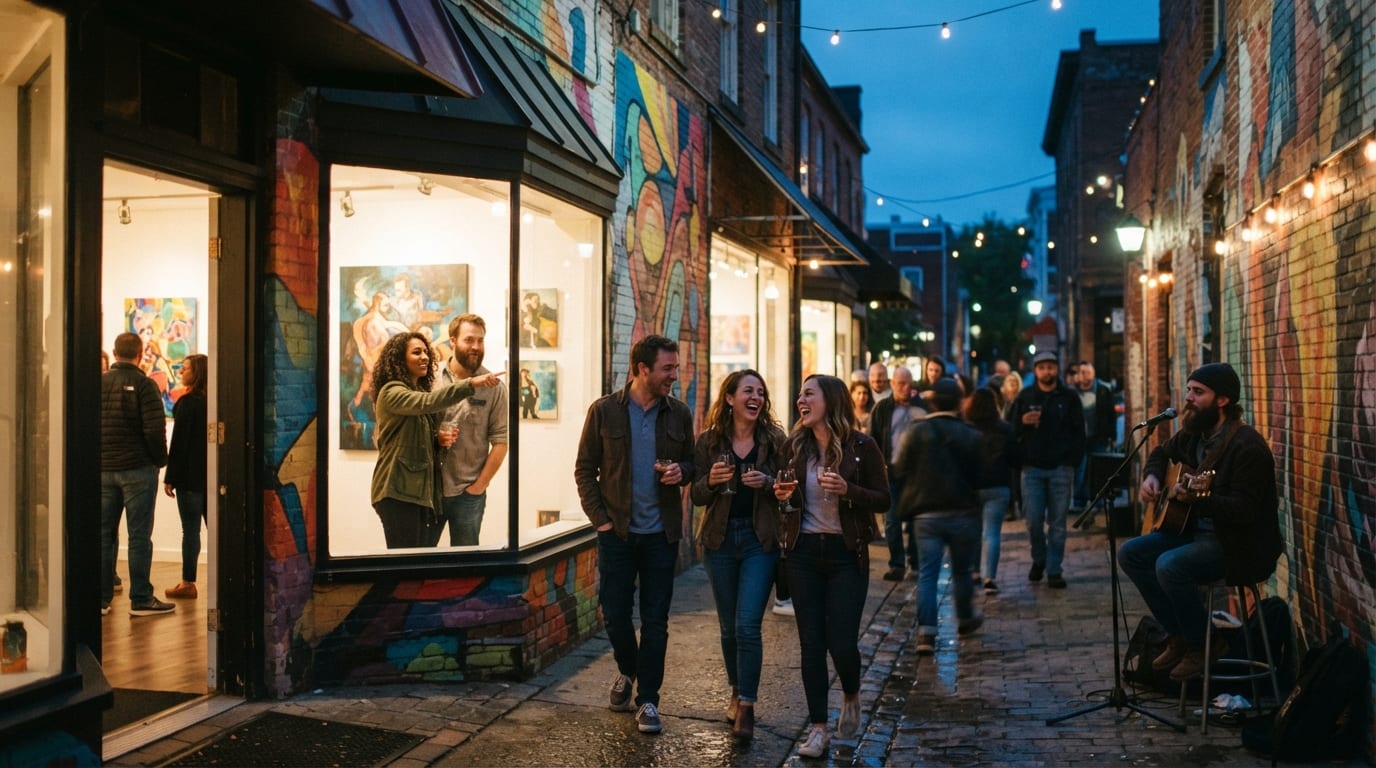
How these gatherings work in practice
Most community events are built around a simple structure: a place, a time and a shared activity. That might be a stage programme, a row of stalls, a parade route, a craft fair, a family activity zone or a market with seasonal produce. The structure gives people something to do with their attention. It also creates natural pauses, such as waiting for a performance, browsing a display, or deciding what to buy.
Those pauses are socially useful. They make short conversations feel normal. Asking which stall has the best bread, whether a craft fair runs late, or when the next set begins can open a door without demanding too much. A vendor may know which neighbourhood groups are active. A fellow visitor may recommend another event. A volunteer may explain the layout. None of this guarantees friendship, but it turns a strange place into a set of useful relationships.
Event location also shapes how welcoming a gathering feels. A central square, park, library, school grounds or high street can make it easy to drop in without commitment. Clear signs, visible entrances and a mix of quiet and busy areas help people who are not yet confident about the area. For newcomers, the ability to arrive and leave without needing a special invitation can be as valuable as the programme itself.
Why local festivals are especially useful
Festivals have a festive logic that everyday places do not. They permit behaviour that might feel awkward elsewhere. People clap for strangers, watch a band they have never heard of, browse handmade goods, join a game, or talk to someone beside them about what is happening. The event gives permission to be curious.
That matters because newcomers often worry about seeming out of place. At a festival, being new is less visible. Many attendees are also moving between groups, families, couples, individuals and neighbours. The crowd is mixed. There is no single correct way to participate. Someone can stay for ten minutes or several hours. They can be social or simply observe. This flexibility makes local festivals approachable, especially for people still learning the social rhythm of a new area.
They also create shared references. After an event, a person may have something to mention at work, in a class, at a shop, or to a neighbour: the music, the food, the craft fair, the busy corner by the stage. Shared references are small, but they help turn a place from background noise into common ground.
Markets as a starting point
Markets are quieter than festivals, and that can be an advantage. A farmers market has a repeat pattern. People return for seasonal produce, familiar vendors and a familiar route through the stalls. Repetition builds recognition, and recognition makes a place feel less anonymous. Someone looking for farmers markets nearby may be seeking groceries, but they may also be finding a regular weekly point of contact with the neighbourhood.
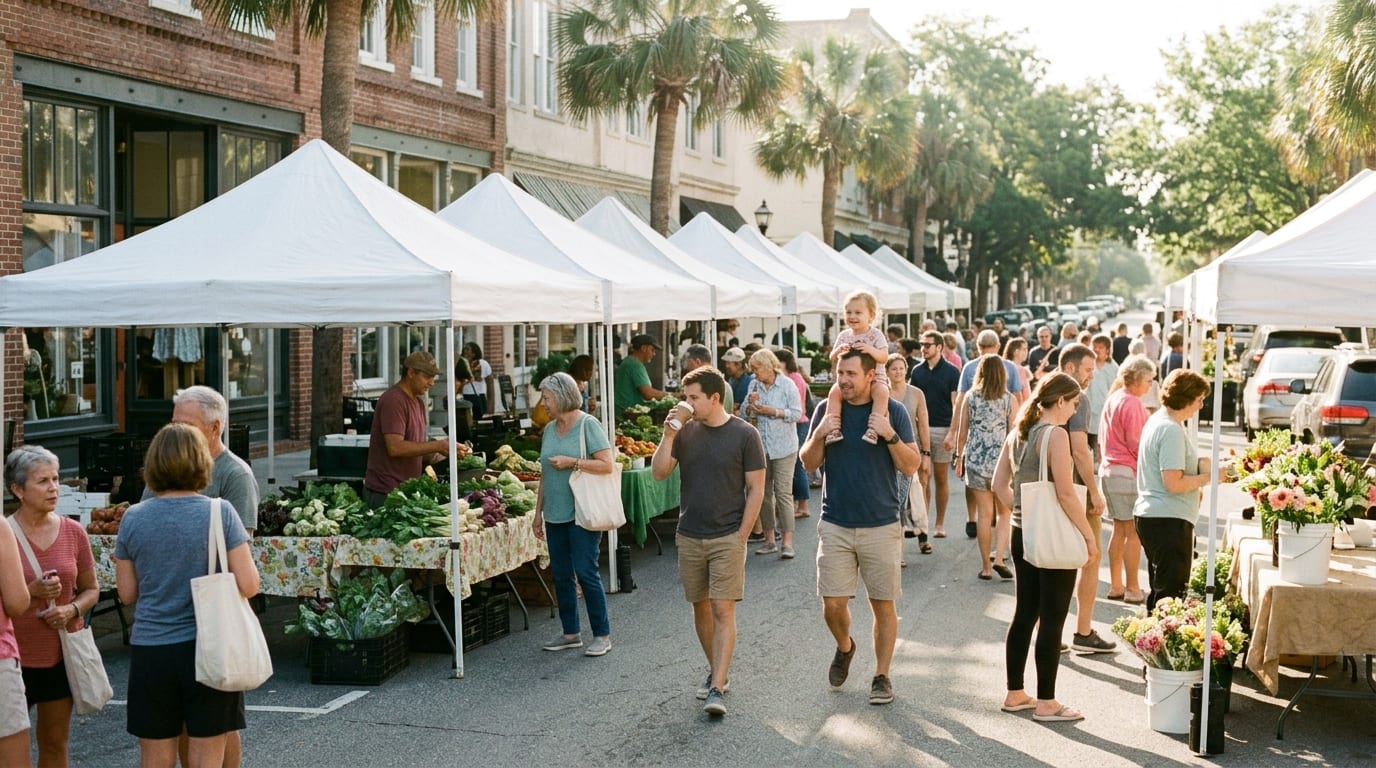
The social value comes from the ordinary nature of the visit. There is no need to dress for an occasion or know anyone in advance. A short exchange about ripe fruit, market hours or the best time to arrive can become the start of a familiar greeting. Over time, the market can feel like a small civic anchor, a place where the week has a visible rhythm.
For a newcomer, the best approach is to treat the first visit as reconnaissance. Notice the layout, the busiest times, the stalls that seem welcoming and the quieter edges where conversation is easier. If a vendor has time, ask about the produce or the area. If the stall is busy, simply observe and return another time. The point is not to force connection, but to make repeated, comfortable contact possible.
What to look for before you go
A little preparation can make an event feel less daunting without turning it into a major plan. The aim is not to optimise every minute. It is to remove the small uncertainties that keep people at home.
- Check the event location and arrive with a rough idea of entrances, exits and nearby transport.
- Look at the programme so there is at least one thing to anchor the visit.
- Note market hours or performance times, especially if the event is spread across a day.
- Consider going at a quieter time if crowds, noise or busy stalls make conversation hard.
- Choose one simple question to ask, such as what is popular today or when the next activity starts.
These details are modest, but they change the experience. A newcomer who knows where to stand, when to arrive and what to ask is more likely to stay long enough for the event to feel familiar. This is especially true at larger local festivals, where the scale can be confusing at first. Picking one area to explore is better than trying to absorb everything.
Making connections without forcing them
Not everyone wants to network. For many people, the idea of striking up conversations at an event can feel tiring. The useful thing about community gatherings is that connection can happen through proximity. Standing near the same display, queueing for the same food, or watching the same street performance creates a soft shared experience. A nod or a comment is enough for many visits.
It helps to think in layers. The first layer is simply being seen in the same place. The second is brief contact, such as a greeting or a question. The third is a short conversation about something concrete. The fourth might be a future invitation or a recognised face at another event. Newcomers do not need to reach the fourth layer on the first outing. Community life usually develops through returns.
For people with families, events can also provide a shared task. Children may want to see a performance or join an activity, which gives adults a natural reason to speak with other parents. For people on their own, a craft fair or market can offer a slower pace than a loud concert, with more chances for one-to-one conversation.
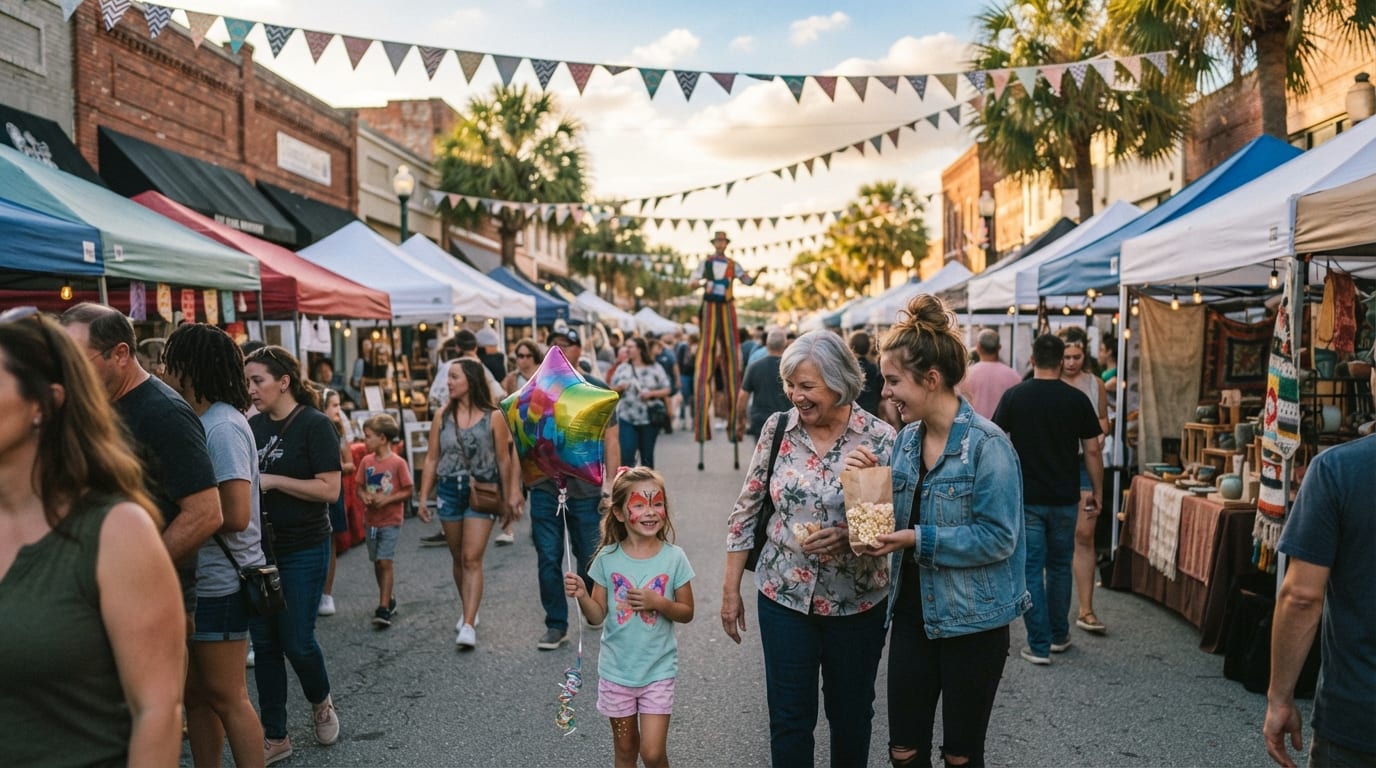
What it means for the reader
The value of local festivals and community events is not just entertainment. They are places where a newcomer can practise being part of a town without having to declare that intention. They make public life easier to read and personal contact easier to start. They also show that belonging is not a single leap. It is often a matter of returning, noticing and being noticed.
Someone trying to feel connected in a new area can begin with a small, repeatable pattern. Attend one event, choose one regular market, learn one route, ask one ordinary question. Over time, those small actions create a personal map of the place. The streets become less abstract. The faces become less anonymous. The town starts to feel like somewhere a person can participate, not just reside.
That is the quiet strength of community events. They do not solve every part of settling in, but they give people somewhere to start. A festival, a market, a concert or a craft fair can turn a new address into a set of possible relationships, one ordinary encounter at a time.